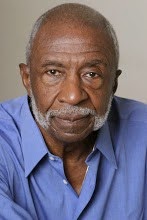
ET ADOLPHUS back from earthlike planets.
I just returned from visiting a few hundred earthlike planets in our galaxy and others. Yes, there are tens of millions of planetary systems similar to our own. Each one has its sun at the center of orbiting planets. Each one has at least one habitable planet where intelligent life does exist – some systems have more than one such planet.
Like humans, no star is exactly the same as another. It is also true that no star system is the same as another – each star, with its orbiting planets, is unique. I find this fact fascinating: although people are similar, although stars are similar, although star systems are similar, although planets are similar, each one is unique. Each one was born and will die. Each one exists in a unique space and time – each one never existed before or will ever exist again.
As we humans venture out into the universe in search of star systems closer to their birth than their death, in search of habitable spaces for our ballooning population, the ability to adapt will be a critical necessity. If the human species is to survive the chaotic and violent process of change in universal systems, every unique human trait must be employed – therefore every human being, each one of us, might very well be a key to humans surviving extinction.
As I encountered other intelligent beings in habitable zones, it was apparent that, although similar, they are different in many respects – not just in their physical characteristic but their behavior as well: some are more regarding of each other than humans tend to be, while others are more ruthless than humans know to be. Just as we can't explicitly predict human behavior the behavior of other intelligent beings is even more incomprehensible and unpredictable.
Well, fellow travelers I'm off again to the edge of our universe – this time to be inside a dying star at the end of its life. You earth-bounds look up and think about me once in a while, I'll get your thoughts even though we never meet.
Adolphus A. Ward
www.adolphusward.com/.net
https://www.smashwords.com/books/view/97591
Friday, February 17, 2012

Thursday, February 9, 2012
SYSTEMIC OBSTACLES
SYSTEMIC OBSTACLES/FOCUSSED ANALYSIS
There are systemic obstacles that stand in the way of social, political, and economic progress for African Americans. These obstacles must be identified and critically examined. Middle-class and poor African Americans should be the exclusively focus of the examination. A private group of five (5) – critical analysts – should be formed to structure and conduct the examination.
I've conceptualized a model that could be used to structure and conduct the analysis. I use the acronym L. E. E. – Law, Education, Employment. The question that could be put in the hands of the group is: What in the Law, what in Education, what in Employment slows or blocks the efforts of Black Americans to better their lives?
When the committee has completed its work the findings would be given to the public, to legislators, to educators, and employers – with recommendations for rooting out the obstacles that slow or block the progress of African Americans. This effort would not fit well in a standing (public) institution because of the obvious political constraints. I know that I neither have the economic, social, and political standing, nor, I fear, the intellect to construct the analyst group. So, if this speculation has any value worth carrying forward someone else will have to do it.
Adophus A. Ward
Writer/Actor
There are systemic obstacles that stand in the way of social, political, and economic progress for African Americans. These obstacles must be identified and critically examined. Middle-class and poor African Americans should be the exclusively focus of the examination. A private group of five (5) – critical analysts – should be formed to structure and conduct the examination.
I've conceptualized a model that could be used to structure and conduct the analysis. I use the acronym L. E. E. – Law, Education, Employment. The question that could be put in the hands of the group is: What in the Law, what in Education, what in Employment slows or blocks the efforts of Black Americans to better their lives?
When the committee has completed its work the findings would be given to the public, to legislators, to educators, and employers – with recommendations for rooting out the obstacles that slow or block the progress of African Americans. This effort would not fit well in a standing (public) institution because of the obvious political constraints. I know that I neither have the economic, social, and political standing, nor, I fear, the intellect to construct the analyst group. So, if this speculation has any value worth carrying forward someone else will have to do it.
Adophus A. Ward
Writer/Actor
Sunday, February 5, 2012
ET ADOLPHUS with a note
This is ET Adolphus saying hello to fellow travelers and you unfortunate earth-bounds. Just took a look at myself in a pool of water on a Martian moon. I am indeed an extraterrestrial – bags underneath my eyes and chin, my head's going bald, my elbows and knees of knobbier, and my skin is cold and beginning to shrivel and crack like a planet too far away from the sun. Earth-bounds might see this as horrible but travelers know it's the way it should be – I've been traveling at speeds well beyond that of light for more than ten thousand years and I am just now mature enough to explore other universes. Well, I'm off to visit those earth-like planets scientist think may be habitable for human-kind – I'll let you know what I find.
Thursday, February 2, 2012
YOUNG BLACK MEN IN PRISON
A few years back I wrote an essay suggesting that young black men in prison are there because want to be. In the essay I suggested that the hard work of learning an employable skill was more than they wanted to undertake, so they chose the risky and quick way to making money – knowing, or at lease expecting, they would end up behind bars. I went on to suggest that prison takes these YBM out of the hard-work of having to earn a legal living while at the same time providing a handy excuse why they can't ever be productive members in a community. My speculation was and is born out of the notion that we, all of us, make choices; we choose the course our lives take. Yes, the social, political, and economic processes in America are constructed to limit those choices – to obstruct the progress of black people; but we can overcome those obstacles. Just one suggestion – what do you suppose would happen if a group of young black men went to a learning institution demanding to be enrolled in a specific course of skill development; a course that would lead to a good job at its completion? This country is willing to build more prisons it can just as easily build more classrooms, hire more teachers. Sleep on it
Thursday, January 19, 2012
AMERICAN DREAM A DELUSION
POVERTY THE AMERICAN DELUSION
I've never been hungry, without a bed or roof over head. I'm now retired, and children are all grown, so I write and act to supplement my income. During all of my working life I've never been out of work long enough to exhaust compensation. I have skills that have and will always enable me to feed and house myself. But I've been close enough to poverty to know its despair, its pain, its hopelessness – to know that poverty doesn't come in colors, to discover that it has no compassion for a child or an elder person. Poverty is here in America. We may choose not to see it but it is here among us; and poverty is the insidious infection which will corrupt the health of all Americans – our enemies aren’t who will kill the American dream, it's our own poverty.
I've never been hungry, without a bed or roof over head. I'm now retired, and children are all grown, so I write and act to supplement my income. During all of my working life I've never been out of work long enough to exhaust compensation. I have skills that have and will always enable me to feed and house myself. But I've been close enough to poverty to know its despair, its pain, its hopelessness – to know that poverty doesn't come in colors, to discover that it has no compassion for a child or an elder person. Poverty is here in America. We may choose not to see it but it is here among us; and poverty is the insidious infection which will corrupt the health of all Americans – our enemies aren’t who will kill the American dream, it's our own poverty.
Monday, January 9, 2012
Definition Exclusion Isolation Annihilation
A SPECULATIVE NOTION ABOUT ORGANIZATIONS:
from Definition to Exclusion to Isolation to Annihilation.
I have come to the conclusion that all organizations define themselves by exclusion. In an effort to claim a unique spot of ground on which to stake its claim, an organization continually edits its definition, further excluding itself from all others, and thereby further isolating itself.
For the purpose of this essay an organization is any formal or informal group of people who define themselves in the same way, who follow the same beliefs, and who share common objectives. By this definition a government is an organization, a religion is an organization – any group of people meeting the definition is an organization.
On face organization-definition is innocuous – not harmful. For an organization to be identifiable among many, a unique definition seems unavoidable. However, when that definition moves beyond its name and mailing address and enters the realms of beliefs and objectives, I believe that a form of isolation sets in and becomes injurious to the organization and to those not within it.
When an organization feels isolated it begins to see the world outside itself as hostile and will eventually seek to annihilate it – leading to its own annihilation.
Adolphus A. Ward
Writer/Actor
www.adolphusward.net
from Definition to Exclusion to Isolation to Annihilation.
I have come to the conclusion that all organizations define themselves by exclusion. In an effort to claim a unique spot of ground on which to stake its claim, an organization continually edits its definition, further excluding itself from all others, and thereby further isolating itself.
For the purpose of this essay an organization is any formal or informal group of people who define themselves in the same way, who follow the same beliefs, and who share common objectives. By this definition a government is an organization, a religion is an organization – any group of people meeting the definition is an organization.
On face organization-definition is innocuous – not harmful. For an organization to be identifiable among many, a unique definition seems unavoidable. However, when that definition moves beyond its name and mailing address and enters the realms of beliefs and objectives, I believe that a form of isolation sets in and becomes injurious to the organization and to those not within it.
When an organization feels isolated it begins to see the world outside itself as hostile and will eventually seek to annihilate it – leading to its own annihilation.
Adolphus A. Ward
Writer/Actor
www.adolphusward.net
Thursday, August 11, 2011
VIOLENCE A TOOL FOR CHANGE
VIOLENCE AS A TOOL FOR CHANGE
When looking at the smoldering, looted remains of a neighborhood or when viewing the shredded flesh of human beings after an explosion –
a microphone often carries the response of a witness to a waiting public. The question is most always, "Do you think this violence is anything other than mindless lawlessness?" That same question put another way, "Do you agree with violence as a form of protest?"
The witness usually stammers a bit and responds with words that sound empathetic to underlying frustrations but condemns violence. Whether it's violence against physical property or human beings, no matter where or when we are in time, a microphone may carry the same question and responses. My opinion is the question and the responses are at best ambiguous.
I have a question that may be a better starting point on the value of violence as a tool for change.
Here is the question: "What does our government and its citizens value most – Property or People?"
It is an opinion, but I think those who seek to damage or destroy property or people are seeking to damage or destroy others who hold them to be valuable.
So, a looter; an arsonist; a parent harming a child; a murderer; an invader is seeking to damage or destroy those who hold either the affected people or property or both to be of value.
Adolphus A. Ward
When looking at the smoldering, looted remains of a neighborhood or when viewing the shredded flesh of human beings after an explosion –
a microphone often carries the response of a witness to a waiting public. The question is most always, "Do you think this violence is anything other than mindless lawlessness?" That same question put another way, "Do you agree with violence as a form of protest?"
The witness usually stammers a bit and responds with words that sound empathetic to underlying frustrations but condemns violence. Whether it's violence against physical property or human beings, no matter where or when we are in time, a microphone may carry the same question and responses. My opinion is the question and the responses are at best ambiguous.
I have a question that may be a better starting point on the value of violence as a tool for change.
Here is the question: "What does our government and its citizens value most – Property or People?"
It is an opinion, but I think those who seek to damage or destroy property or people are seeking to damage or destroy others who hold them to be valuable.
So, a looter; an arsonist; a parent harming a child; a murderer; an invader is seeking to damage or destroy those who hold either the affected people or property or both to be of value.
Adolphus A. Ward
Subscribe to:
Posts (Atom)